
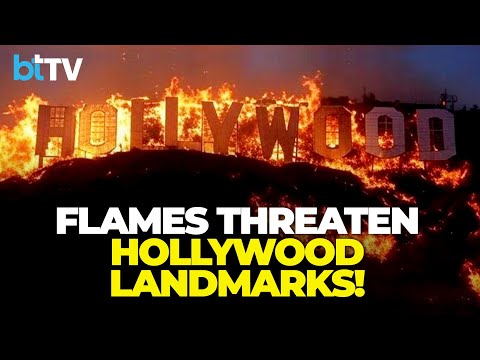
In recent weeks, Southern California has been grappling with a series of devastating wildfires that have not only threatened homes and lives but have also inflicted severe damage on several iconic landmarks. The unstoppable force of the fires, driven by strong winds and dry conditions, has put Los Angeles and its surrounding areas on high alert, disrupting daily life and causing widespread concern among residents and officials alike.
### The Scale of Destruction
The wildfires, which ignited due to a combination of extreme heat waves and prolonged drought conditions—both exacerbated by climate change—have swept through thousands of acres. Despite the relentless efforts of firefighters from multiple counties, assisted by aerial firefighting units, the flames have continued to advance unchecked in several areas.
Among the casualties are some of California’s beloved landmarks. Notably, Griffith Park, known for its scenic views and the iconic Griffith Observatory, has suffered significant damage. The observatory itself was narrowly saved thanks to the efforts of firefighters who battled against shifting winds and challenging terrain. However, much of the surrounding parkland has been scorched, impacting local wildlife habitats and hiking trails cherished by Los Angeles residents.
### Impact on Communities
The fires have forced thousands from their homes as evacuation orders were put into place across various communities from Santa Barbara to San Diego counties. Schools have closed temporarily, and air quality warnings have been issued due to heavy smoke that has blanketed many parts of LA County.
Moreover, the fire’s proximity to residential areas has left many Angelenos in a state of constant uncertainty and fear. “It’s like waiting for an invisible enemy,” shared Maria Gonzalez, a resident of Pasadena who was evacuated as a precautionary measure when the flames came within a few miles of her neighborhood.
### Economic Toll
Beyond physical damage, there is also an economic toll that will inevitably burden local economies. Tourism in affected areas faces a significant downturn; landmarks such as Griffith Park attract millions of visitors each year who contribute to both local businesses and broader economic health. Restoration efforts will require substantial financial resources at a time when state budgets are already stretched thin due to ongoing pandemic-related expenditures.
### Emergency Response Measures
State officials have declared emergencies in multiple counties—a move that facilitates federal assistance and mobilizes additional resources for combating the fires. Governor Gavin Newsom addressed state residents in recent press briefings urging everyone to heed evacuation orders strictly and emphasizing the importance of community cooperation during this crisis.
Local authorities are coordinating with NGOs like the Red Cross for setting up shelters and aid stations for evacuees providing essentials from medical care to food supplies. Meanwhile, modern technology such as GPS tracking systems is being used more extensively to predict fire movements more accurately.
### Looking Ahead: Prevention Strategies
As immediate firefighting efforts continue, there is also an increased focus on long-term strategies to mitigate future risks. Discussions revolve around enhancing forest management practices—including controlled burns—and expanding urban interfaces that can act as firebreaks.
Climate change remains at the heart of why these fires are becoming more frequent and intense; consequently, state officials emphasize sustainable practices alongside stricter environmental regulations aimed at mitigating climate impacts.
###
As Los Angeles looks toward recovery post-crisis management phase dealing with both emotional trauma left behind by close encounters with massive fires restoration physical spaces once teeming life; community resilience will be crucial adapting new realities where wildfire threats become routine part living Californian landscape.