
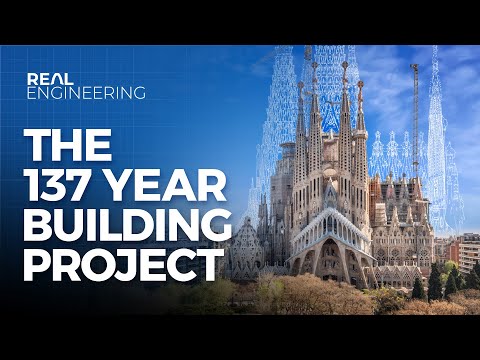
Nestled in the heart of Barcelona, Spain, the Basilica de la Sagrada Familia is not only a monumental icon of architecture but also holds the title of the world’s oldest ongoing construction project. This extraordinary basilica, with its intricate facades and towering spires that puncture the skyline, has been under construction for over a century and continues to be a work in progress today. More than just a church, the Sagrada Familia is an embodiment of devotion, art, and the relentless human spirit.
#### Historical Beginnings
The story of Sagrada Familia began in 1882 when construction kicked off under architect Francisco de Paula del Villar. However, just a year into the project, Antoni Gaudí took over as chief architect at merely 31 years old. Gaudí transformed the initial conventional design into an ambitious Gothic-Art Nouveau masterpiece that would occupy much of his career until his death in 1926.
#### Gaudí’s Vision
Antoni Gaudí’s plans for the Sagrada Familia were revolutionary. His design included 18 spires symbolizing important biblical figures: twelve for the apostles, four for the evangelists, one for Mary, and another for Jesus Christ. These are set to reach heights of up to 172 meters (564 ft), making it one of Europe’s tallest religious buildings.
Gaudí devoted over 40 years of his life to working on the temple and was famously quoted as saying “My client is not in a hurry,” when asked about the lengthy construction period. Upon his untimely death in 1926 after being hit by a tram, less than a quarter of his grandiose project was completed.
#### Architectural Ingenuity and Spiritual Symbolism
The structure itself is rich with Christian symbolism as expressed through its architecture; every façade tells different biblical tales crafted intricately with sculptures that seem to breathe life into stone. The exterior portrays scenes from Jesus’ birth (Nativity Façade) to His passion and crucifixion (Passion Façade), while inside it features an array of colors streaming through stained glass windows illuminating an interior resembling a stone forest.
One cannot discuss this basilica without noting its architectural innovations. Gaudí incorporated unique techniques such as using catenary arches which provide better stability and resistance by following natural gravitational curves. Moreover, he employed hyperboloid structures which allow light to filter inside creatively—reflecting his belief that color is central to expressing life.
#### Progress Through Adversities
The project faced numerous setbacks including interruption by the Spanish Civil War during which many original plans were destroyed—leaving future architects relying partly on guesswork and partly on remnants pieced together from Gaudi’s models and drawings recovered later.
Financial constraints have also played their part; being funded solely by donations initially slowed progress considerably until recent times where ticket sales from tourists visiting this UNESCO World Heritage Site have expedited construction considerably.
#### A Race towards Completion
In recent years technology has propelled Gaudi’s vision closer to completion; computer-aided design has enabled more accurate interpretations while modern machinery facilitates quicker construction without compromising on intricacy or quality—targeting completion by 2026 marking Antoni Gaudi’s centenary death anniversary.
#### Conclusion
The ongoing saga of Sagrada Familia’s build reflects more than architectural brilliance—it epitomizes persistent effort across generations. Each stone laid is testament not only to historical craftsmanship but also unfolding future aspirations where faith meets art spectacularly carved out in real-time evolution—a true labor of love enduring through time aiming for perfection long beyond our own lifetimes.