
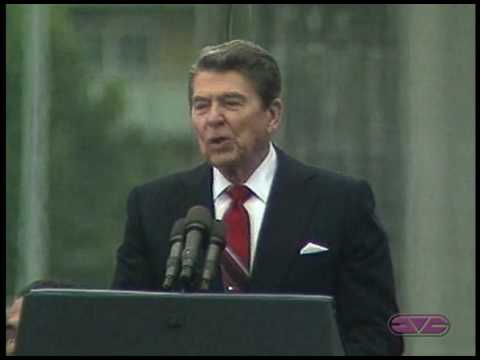
On June 12, 1987, against the stark backdrop of the Berlin Wall, a symbol of division and oppression, President Ronald Reagan delivered one of the most iconic speeches of his presidency. Addressing a crowd from the West Berlin side near the Brandenburg Gate, Reagan directly challenged Soviet Premier Mikhail Gorbachev to go beyond mere reform and take a bold step towards promoting peace and ending the Cold War. His commanding words, “Mr. Gorbachev, tear down this wall!” became a defining moment in Cold War history and are often credited with foreshadowing the fall of the Berlin Wall just over two years later.
### Contextual Backdrop
The Berlin Wall was erected in 1961 by East Germany, backed by the Soviet Union, to prevent East Germans from fleeing to West Germany. By doing so, it became a glaring symbol of communist oppression and a physical manifestation of what Winston Churchill famously called the “Iron Curtain” between Eastern and Western Europe. Throughout its existence, the wall was not just a barrier between East and West Berlin but also a representation of ideological conflict between democracy and communism.
### Crafting The Speech
President Reagan’s speech at the Brandenburg Gate was not merely spur-of-the-moment rhetoric but rather an event that had been meticulously planned. The words “tear down this wall,” however controversial they seemed to many advisors who feared heightening tensions with Moscow, were deliberately chosen by Reagan who understood the power of symbolism in geopolitical discourse. His speechwriters Peter Robinson sought input from American officials stationed in Berlin and used their insights about increasing disillusionment within East Germany to craft a speech that would resonate on both sides of the Wall.
### The Speech
Standing before 20,000 people while overlooking an edifice that divided families and friends for nearly three decades, Reagan’s speech emphatically highlighted freedom’s moral superiority over oppression. He acknowledged efforts made by Gorbachev towards openness (glasnost) and restructuring (perestroika) but stressed that actions spoke louder than words:
“General Secretary Gorbachechav has urged us to expand our thinking,” said Reagan. “And I say to you: If you seek peace if you seek prosperity for your people…come here to this gate! Mr. Gorbachev opens this gate! Mr. Gorbachev tear down this wall!”
### Impact and Legacy
Reagan’s direct challenge stirred considerable global reaction; it was seen as provocative but ultimately visionary by his supporters while being dismissed as unrealistic or overly aggressive by his critics. However, history has often looked back at this moment as pivotal in exerting pressure not only on Gorbachev’s policies but also on Eastern European regimes facing increasing unrest from their own populations.
Remarkably, on November 9, 1989—just over two years after Reagan’s speech—the people of Berlin took sledgehammers to their despised barrier marking the beginning of its official demolition along with subsequent revolutions that swept through Europe leading up to the dissolution of Soviet Union itself in 1991.
### Conclusion
Reagan’s “Tear Down This Wall” speech is remembered not only for its audacity but also for its profound optimism about human liberty prevailing over division. It reminded us all that words wield power—to inspire change and embolden movements toward greater freedom. As we reflect on historical moments that have shaped our modern world landscape it becomes clear; leadership coupled with decisive articulation can indeed alter history’s course.