
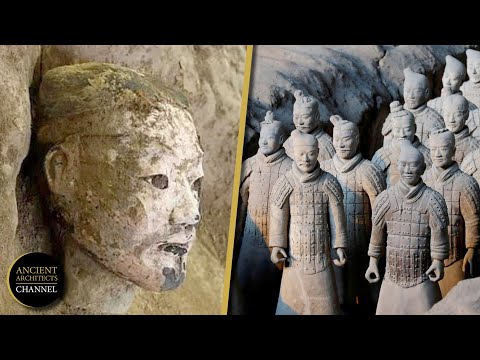
In an extraordinary archaeological breakthrough, over 200 terracotta warriors have been unearthed near the ancient city of Xi’an, home to the already famous Terracotta Army associated with China’s first emperor, Qin Shi Huang. This significant find not only expands our understanding of Qin dynasty artifacts but also sheds new light on ancient Chinese military formations and craftsmanship.
### The Discovery
The recent excavation took place at a previously unexplored pit located less than a kilometer from Emperor Qin Shi Huang’s burial mound. Archaeologists from the Shaanxi Provincial Institute of Archaeology led the meticulous excavation that began in early 2023. The operation revealed an impressive array of statues, each standing about six feet tall and uniquely depicting various ranks of military personnel.
### Insights into Craftsmanship and Layout
Each warrior was found positioned according to what experts believe to be strategic military formations, similar yet distinctly different from those found in the main terracotta army pits discovered in the 1970s. These newly discovered figures are characterized by their vivid expressions, intricate hairstyles, armor styles, and weaponry, suggesting they were intended to represent a specific army unit or perhaps even a different aspect of Emperor Qin’s forces.
The craftsmanship points to highly skilled artisans who had perfected the art of terracotta sculpture by using advanced techniques that included assembling parts made separately—heads, arms, legs, and torsos—then finishing them with detailed features and painting them elaborately.
### Historical Context
The Terracotta Army is part of a larger necropolis designed to accompany Emperor Qin Shi Huang into the afterlife. Believed to have been constructed between 246 BCE and 208 BCE, these clay soldiers were buried with the emperor in order to protect him and provide him with a semblance of his earthly powers in the afterlife. The site reflects the emperor’s control over resources and labor as well as his obsession with immortality.
### Implications for Historical Scholarship
This discovery is poised to revolutionize our understanding of the Qin dynasty’s military prowess and cultural practices. Researchers believe that studying these new figures can provide deeper insights into the logistical aspects of crafting such an enormous army and perhaps clarify some questions about ancient Chinese beliefs surrounding death and the afterlife.
Moreover, preliminary studies suggest variations in armor and weaponry that might indicate differences in rank or function among soldiers within these newly unearthed contingents. This could lead to a more nuanced understanding of how ancient Chinese armies were structured.
### Future Prospects
The excavation site still holds much promise for further discoveries; areas adjacent to it have yet to be fully explored. Additionally, technological advancements in archaeology could unlock more secrets held by these ancient statues through non-invasive soil analysis or even DNA traces on artifacts associated with terracotta figures.
### Conclusion
The unearthing of more than 200 additional terracotta warriors near Xi’an offers an exciting chapter in our exploration of China’s rich past. It not only captivates those interested in archaeology but also enthralls historians, art historians, and general global audiences fascinated by ancient cultures’ complexities. As research continues at this site, we may expect many more revelations about Emperor Qin Shi Huang’s reign and his legendary afterlife army.