
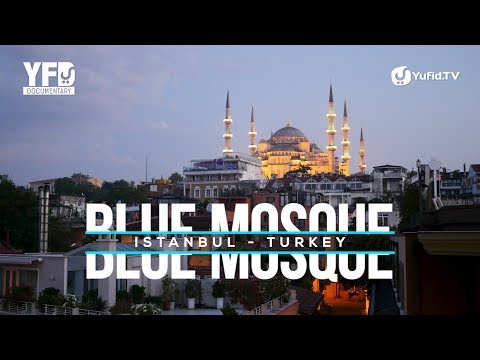
Nestled in the heart of Istanbul, Turkey, the Masjid Sultan Ahmed, more popularly known as the Blue Mosque, stands as a testament to the grandeur of Islamic art and architecture. This historic mosque is not only a place of worship but also a major tourist attraction that draws millions from around the globe. Through this detailed exploration inspired by a Yufid Documentary, we delve into the mosque’s architectural magnificence, cultural significance, and its role in today’s society.
### Historical Background
Constructed between 1609 and 1616 during the rule of Sultan Ahmed I, the Blue Mosque was designed by architect Sedefkâr Mehmed Ağa. His design would go on to symbolize the pinnacle of Ottoman architecture and was intended to rival the nearby Hagia Sophia, which lies just a few hundred meters away. The mosque was part of a larger complex that included a madrasa (school), hospital, caravanserai (inn), and market, although only parts of these structures survive today.
### Architectural Marvel
The Blue Mosque gets its nickname from its interior decoration dominated by blue Iznik tiles—more than 20,000 in total—that adorn its high ceiling and walls. These hand-made ceramics feature traditional Ottoman patterns and are highlighted by natural light that floods in through more than 200 stained glass windows. The mosque’s main dome stretches impressively to 43 meters high and is supported by four enormous pillars known as “elephant feet,” owing to their tremendous size.
The exterior is equally impressive with its harmony of domes and six slender minarets—a number only surpassed by Mecca’s Haram Mosque at that time. This was considered audacious enough to require Sultan Ahmed I to order a seventh minaret be added to Mecca’s mosque.
### Cultural Significance
Masjid Sultan Ahmed serves as a stunning symbol of Islamic faith and Ottoman heritage. It represents an era when Istanbul (formerly Constantinople) was the capital of an empire stretching across three continents. The mosque’s design elements like Arabic calligraphy panels containing verses from the Quran, large courtyard with an ablution fountain for ritual cleansing before prayers reflect deep-rooted religious traditions.
### Tourism and Educational Role
Today, while still serving as an active mosque where thousands come to perform daily prayers particularly during Ramadan and Friday services—the Blue Mosque has also embraced its role as a cultural ambassador for Turkey. Open to visitors outside prayer times, it offers insights into Islamic culture through guided tours that explain its historical background and architectural details.
Moreover, educational programs conducted within are geared towards fostering understanding between cultures – crucial in today’s globalized world – making it not just a relic admired for its aesthetic beauty but also respected for its contribution towards intercultural dialogue.
### In Conclusion
Masjid Sultan Ahmed or The Blue Mosque remains one of Istanbul’s most iconic landmarks. Its captivating beauty exemplifies classical Ottoman architecture while embodying rich spiritual tradition. Whether explored through documentaries like that produced by Yufid or experienced first-hand under its serene domes; it continues to inspire awe among all who walk through its doors—be they devotees or tourists from afar.