
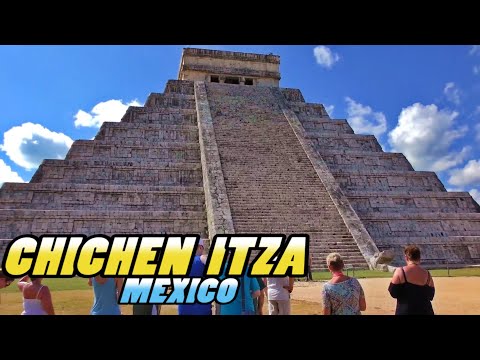
Nestled in the heart of Mexico’s Yucatan Peninsula lies one of the world’s most enigmatic and captivating archaeological sites—Chichen Itza. This sprawling complex of Mayan ruins paints a vivid picture of a civilization that was both advanced and steeped in mystical practices. Each stone at Chichen Itza is imbued with history, each structure a testament to the Maya’s astronomical precision and architectural genius. As a UNESCO World Heritage site and one of the New Seven Wonders of the World, Chichen Itza attracts millions of tourists who are eager to step back in time and experience the grandeur of this ancient city.
#### The Rise and Fall of a Civilization
Chichen Itza, which translates to “at the mouth of the well of Itza,” was one of the largest Maya cities during its peak from AD 600 to 1200. This pre-Colombian city played significant roles not only as a political capital but also as a religious center for many centuries. The city saw different phases of cultural influences, evident in its diverse architectural styles ranging from Classic Maya to Toltec-Maya elements.
However, by 1500, just before the Spanish arrival in America, Chichen Itza had been largely abandoned. The reasons behind its decline remain partly speculative but are believed to include overpopulation, overuse of resources, internal strife, and possibly prolonged droughts.
#### Architectural Marvels
The site covers an area over 5 square kilometers and comprises numerous impressive structures meticulously aligned with astronomical bodies which reflect the Maya’s sophisticated knowledge.
##### El Castillo (Temple of Kukulcan)
Dominating the center of Chichen Itza is El Castillo or Temple of Kukulcan. This four-sided pyramid structure stands about 30 meters high including a temple on top. Astonishingly engineered, each side has 91 steps adding up to 364 steps with an additional step at the temple totaling 365 – corresponding to each day in their solar year. During equinoxes, shadows cast by sunset create an illusion of a serpent slithering down the pyramid—a testimony to their astronomical accuracy.
##### The Great Ball Court
Another striking feature is the Great Ball Court measuring about 168 meters long and 70 meters wide making it the largest ball court in Mesoamerica. Games held here were highly ritualistic with life-and-death stakes attributed often to religious significance more than recreational activity.
##### Temple Of Warriors
Adjacent stands another monumental area – The Temple Of Warriors complex featuring rows upon rows lined with columns adorned by carvings that depict warriors themselves likely serving both ceremonial functions and administering civil power within society.
##### Sacred Cenote
Towards north lies Sacred Cenote—a natural sinkhole considered sacred wherein offerings including human sacrifices were made appease Chaac god rain agriculture fertility thus showing deep connection nature spirituality enclosed within Mayan belief system itself.
#### A Centre for Learning: Astronomy & Mathematics
Chichen Itza also served as an astrological observatory particularly evident through “El Caracol” or snail highly suggestive due its spiral staircase resembling mollusk shell planned such way allow observation precise celestial events helping advance understanding universe complex ways before telescopes invented.
#### Preserving Legacy & Tourism Impact
Today part preservation efforts governance strategies help balance conservation tourism pressures especially near delicate structures like El Castillo ensuring lasting legacy withstand time preserve cultural heritage future generations explore appreciate learn from incredible civilization once thrived here Mexican peninsula achieving balance between accessibility protection key sustainable development site remains priority stakeholders involved management upkeep historic wonder amidst modern challenges presented increased tourist influx environmental concerns alike.