
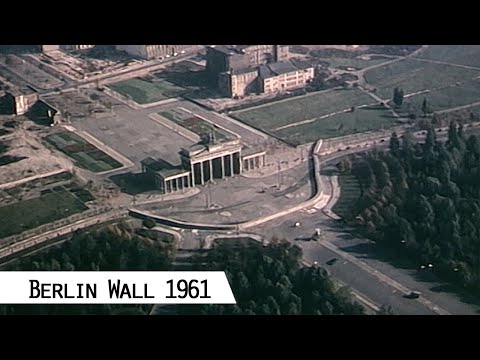
In an extraordinary feat of technological innovation, a team of historians and AI experts has recently restored rare footage capturing the initial construction of the Berlin Wall in August 1961. This significant project has brought to life one of the Cold War’s most iconic moments, offering a new visual perspective on historical events that had previously been confined to grainy images and written accounts.
#### The Importance of the Berlin Wall
The Berlin Wall, a potent symbol of Cold War tensions, was erected overnight on August 13, 1961. It was a physical manifestation of the ideological conflict between East and West Germany and, more broadly, between Soviet and Western blocs. The concrete barrier enclosed West Berlin, effectively cutting it off from East Germany until its fall in November 1989. The division it created is a stark reminder of the clash between communism and capitalism.
#### Discovering and Restoring the Footage
The footage in question was discovered in an old archive by a group of historians who were researching early Cold War propaganda. The film was brittle, faded, and almost unwatchable until they decided to collaborate with AI specialists to restore it.
Using advanced machine learning algorithms trained on thousands of hours of historical film footage and still photos from the era, AI tools were able to enhance frames by interpolating missing details, correcting colors based on known data from those times, and stabilizing shaky scenes. This restoration brought clarity to scenes that were previously just blurred images.
#### What Does the Footage Show?
The restored footage provides a unique window into the atmosphere in Berlin during those initial days when families were suddenly split apart by this imposing barrier. One can see East German soldiers laying down cinder blocks under glaring floodlights; anxious faces of local residents speak volumes without sound; West Berliners throwing supplies over what initially was just barbed wire; all underlined by an eerie silence that speaks louder than any narrative could.
Additionally, viewers can vividly observe dialogues between soldiers guarding different sides of the wall or momentous protests by West Germans who gathered near Brandenburg Gate holding signs demanding freedom for their city. These images not only document but also evoke deep emotional responses illustrating how disorienting and traumatic these events were for ordinary citizens.
#### Educational Impact
Beyond its visual spectacle, this restored footage serves as an invaluable educational tool. By making history accessible and engaging through vivid imagery enhanced by AI technology, educators can offer students deeper insight into not only political strategies but also human experiences during this pivotal period.
#### Conclusion
This groundbreaking restoration project not only preserves important historical artifacts but also exemplifies how modern technology like artificial intelligence can serve as a bridge connecting past events with present-day inquiries. As we look back at these haunting images from August 1961—with all their newly-revealed details—it becomes clear that understanding our history in new ways informs our perspective on today’s world issues.
Moving forward, such projects underscored with collaborative efforts between historians and technologists promise further insights into our shared past—making history not just something to be studied but something vividly experienced.