
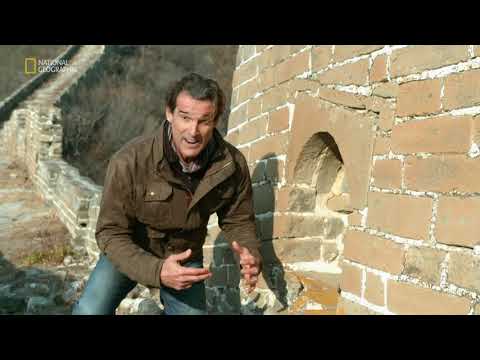
The Great Wall of China, a marvel of ancient engineering, stretches over 13,000 miles and has stood as a symbol of both the strength and isolationism of ancient Chinese civilization. National Geographic’s documentary series “Ancient China From Above” takes us on an aerial journey to uncover secrets hidden by centuries and only now revealed through modern technology. This episode offers a unique perspective on one of the world’s most famous monuments, delving into its construction, purpose, and the untold stories that are part of its enduring legacy.
**Aerial Insights and Archaeological Innovations**
With the advantage of advanced drone technology and satellite imaging, “Ancient China From Above” explores areas of the Great Wall that are not accessible by foot. These high-tech tools provide stunning visuals and reveal structures buried beneath vegetation or eroded by time. Dr. Allan Maca, an archaeologist who leads the series, explains how these technologies have revolutionized our understanding of complex structures like the Great Wall.
**Construction Wonders Unveiled**
The documentary dissects the architectural ingenuity involved in constructing the Great Wall. Originally built by Emperor Qin Shi Huang in the third century BC to protect against northern invasions, it was expanded by successive dynasties into what we see today. The construction required immense coordination across various territories which later became integral parts of a unified China.
Laborers included soldiers, peasants, rebels, and even prisoners. Remarkably, materials for building the wall were sourced locally: stones from mountain ranges were used in rugged terrains while rammed earth formed part of the structure in plains. The series highlights how segments like those made from tamped earth have survived centuries despite harsh environmental conditions.
**Strategic Significance Beyond Defence**
“Ancient China From Above” also explores strategic viewpoints along various points on the wall where signal towers were constructed. Through animations reconstructing scenes from millennia ago, viewers can see how smoke signals were used to transmit messages across great distances within minutes — an ancient version of modern communication networks.
Further insights reveal that besides protection against invasions, parts of the wall played roles in trade control and regulation under imperial rule. Guard stations served as customs posts to manage silk road traffic and collect duties contributing to economic controls imposed by imperial authorities.
**Cultural Impact & Symbolism**
The series poignantly captures locals’ narratives who live alongside remnants of this great structure. For them, it is more than a relic; it is a manifestation of cultural resilience and continuity from generation to generation—stories imbued within each brick laid by their ancestors.
Furthermore, “Ancient China From Above” delves into legends such as those relating to Meng Jiangnü who mourned her husband after he died building the wall; her tears supposedly causing a section to collapse thereby revealing his bones which she retrieved for proper rites — illustrating both human cost associated with its construction & its deep embedment in Chinese folklore.
**Challenges Preserving History**
With increasing tourism and natural deterioration taking their toll on this UNESCO World Heritage Site, preservation challenges are significant. The documentary details efforts made towards sustainable tourism practices which encourage responsible travel standards while ensuring economic benefits derived remain local.
In conclusion, National Geographic’s “Ancient China From Above” provides not just an overview but an insightful exploration into one of history’s grandest constructions—the Great Wall Of China—revealing not just architectural feats but also societal impacts spanning centuries which continue influencing lives even today.