
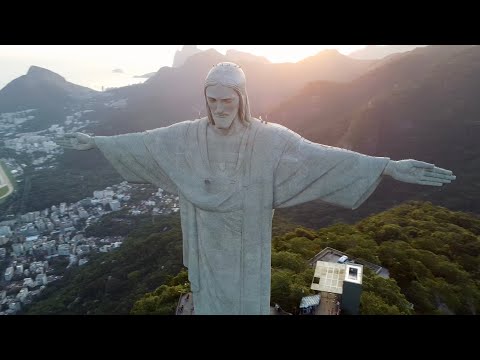
Perched atop the 700-meter high Corcovado Mountain within the lush Tijuca Forest National Park, the Cristo Redentor (Christ the Redeemer) statue in Rio de Janeiro, Brazil, stands as a symbol of peace and a beacon of Brazilian Christianity. This monumental statue, one of the New Seven Wonders of the World, has been captured numerous times through photographs and videos. However, the emergence of 4K drone technology has offered a new and breathtaking perspective on this iconic sculpture.
### A Symbol Rising Above
Designed by French sculptor Paul Landowski and constructed by Brazilian engineer Heitor da Silva Costa in collaboration with French engineer Albert Caquot, Cristo Redentor was completed in 1931. The statue is made of reinforced concrete clad in a mosaic of thousands of triangular soapstone tiles. It stands 30 meters tall with arms stretching 28 meters wide, overlooking the city of Rio de Janeiro as a guardian.
### The Breakthrough of Drone Technology
The advent of drone technology has revolutionized how we capture images and videos of landmark monuments around the world. Drones equipped with high-definition cameras can fly around difficult terrains and record from angles that were once impossible or required costly equipment like helicopters. Now, enthusiasts and professionals alike can explore and document sites in unprecedented detail.
### Experiencing Cristo Redentor in 4K
The launch of 4K drones brought about an even more profound change in aerial videography. With four times as many pixels as standard HD cameras, 4K drones capture sharper and clearer images that offer viewers mesmerizingly detailed visuals. When this technology is applied to filming Cristo Redentor, the result is nothing short of divine.
The footage begins typically at dawn or during golden hours to catch soft light draping over Christ’s outstretched hands, creating dramatic shadows and highlighting details usually lost in harsh midday light. The drone glides around the statue – sometimes circling it majestically – to provide a full panoramic view against the backdrop of Rio’s sprawling landscapes.
From these soaring heights, viewers are treated to glorious vistas including glimpses down onto famed beaches like Copacabana and Ipanema, Sugarloaf Mountain at Guanabara Bay’s mouth, and even distant views towards Rio’s bustling downtown area.
### A Spiritual Journey from Above
More than just an architectural achievement; viewing Cristo Redentor via drone footage evokes a palpable sense of spirituality and awe. For many watchers globally who may not have the chance to visit Brazil personally – especially amidst travel restrictions due to global events like pandemics – this footage serves as a digital pilgrimage. Observing from such intimate yet expansive perspectives fosters connections that transcend geographical boundaries.
### Conclusion: Embracing New Perspectives
As technology progresses further into creating sharper resolutions or more stabilized flight patterns for drones, our experience with historical sites continues to transform dramatically. The combination of artistry inherent in landmarks like Cristo Redentor with advanced filming techniques opens up new dialogues between old symbols and modern viewership.
In essence, capturing Christ the Redeemer through ultra-high-definition drone footage not only deepens our appreciation for this incredible monument but also for technological advancements allowing us closer glimpses into beauty otherwise out-of-reach. These mesmerizing footages remind us that while some icons stand steadfast through time – our ways to admire them will keep evolving as long as curiosity drives us towards seeking new horizons.