
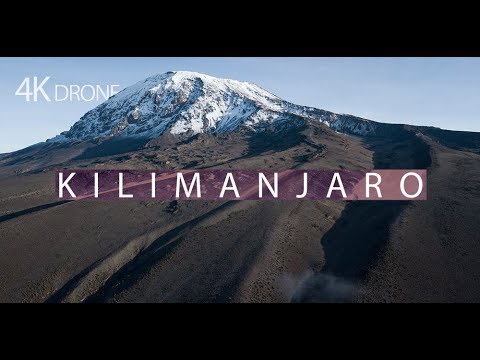
Mount Kilimanjaro, a dormant volcano in Tanzania, is not only Africa’s tallest peak but also a symbol of stunning natural beauty and diversity. Recently, it became the subject of an extraordinary cinematic endeavor – a detailed exploration via drone cameras that captured its grandeur in mesmerizing 4K resolution. This project has been hailed as producing some of the most spectacular drone footage ever captured, offering a fresh perspective on this majestic mountain.
#### The Journey to Kilimanjaro’s Summit Through a Lens
The idea to capture Mount Kilimanjaro in unprecedented detail was conceived by a team of filmmakers and photographers who specialize in aerial drone cinematography. Their goal was ambitious: to showcase Kilimanjaro like never before, revealing not just its snowy summit but also its varied ecosystems, from lush rainforests to alpine deserts.
Equipped with the latest in drone technology, the team embarked on their journey. The drones used were capable of high-altitude flight and equipped with ultra-high-definition cameras capable of shooting in 4K. This technology was crucial in capturing the vastness and minute details of Kilimanjaro’s landscapes under changing light conditions.
#### Innovations That Made It Possible
Capturing Kilimanjaro in 4K was not without its challenges. The altitude, weather conditions, and sheer scale of the mountain posed significant hurdles. However, advancements in drone technology have been pivotal. Modern drones come equipped with features such as enhanced battery life, more robust gyro-stabilization systems, and advanced GPS functionalities which allow for precise maneuvering and stability even in adverse conditions.
Moreover, these drones can operate autonomously or be piloted manually from great distances, allowing filmmakers to capture footage from angles that were once thought impossible without the aid of helicopters or fixed-wing aircraft – methods that could be intrusive to the natural environment.
#### A New Perspective on Biodiversity
The resulting footage from this venture is nothing short of breathtaking. Viewers are treated to sweeping views over mist-covered trees stretching towards the horizon at dawn, vibrant wildlife spectacles in the moorlands, and stark beauty within the alpine desert zone. Perhaps most awe-inspiring is the close-up footage of Kilimanjaro’s glaciers – an intimate look at these dwindling icy giants.
This high-resolution imagery does more than just stun visually; it serves as an important tool for environmental scientists and climatologists studying glacier recession due to global warming. The detailed visual data helps track changes over time with much greater accuracy than satellite images.
#### Impact on Conservation Efforts
The extraordinary 4K footage has also played a crucial role beyond scientific research; it has had significant impacts on conservation efforts. By showcasing Kilimanjaro’s breathtaking natural beauty and fragile ecosystems to a global audience, it fosters greater awareness around conservation issues surrounding this iconic mountain.
Tourism too can benefit immensely from such endeavors. High-quality visual content can boost interest among potential travelers who wish to experience Kilimanjaro’s magic first-hand while adhering to responsible tourism practices that prioritize environmental conservation.
#### Conclusion: A Milestone in Filmmaking and Conservation
The project—Kilimanjaro 4K—is a testament to how technological advancements can aid both artistic endeavors and scientific research. As one of the best drone footages ever captured, it sets new standards for filming natural landscapes while promoting conservation awareness crucial for preserving our planet’s wonders for future generations.
As we move forward into an era where digital storytelling meets environmental advocacy through platforms like documentary filmmaking or virtual reality experiences, projects like these remind us why preserving our world’s natural heritage is imperative—and how we can keep pushing boundaries using technology as our ally.