
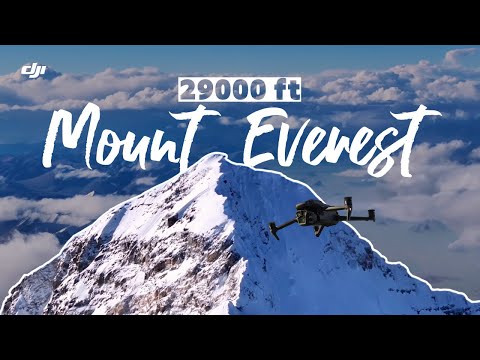
Mount Everest, standing at a staggering height of about 29,029 feet (8,848 meters), has always been the epitome of mountaineering adventures and one of the most captivating natural wonders in the world. It draws climbers from around the globe who aspire to conquer its peak. However, climbing Everest is not just a physical challenge but also a logistical one, particularly when it comes to capturing high-quality footage of this majestic mountain. Enter DJI’s Mavic 3 Pro, a breakthrough in drone technology offering unparalleled imagery from heights that are often unreachable by human climbers alone.
#### **The Technical Marvel: DJI Mavic 3 Pro**
DJI has long been at the forefront of drone technology and their latest offering, the Mavic 3 Pro, is no exception. Designed for professionals and aficionados alike, this drone boasts an impressive suite of features that make it ideal for high-altitude photography:
– **Camera Quality**: The Mavic 3 Pro comes equipped with a dual-camera system featuring a 4/3 CMOS Hasselblad sensor capable of capturing 20MP photos and 5.1K videos. This advanced imaging hardware ensures crystal-clear shots even in the extreme conditions found at higher altitudes.
– **Battery Life**: One of the key improvements in this model is its extended battery life which allows for up to 46 minutes of flight time under optimal conditions – crucial when flying in remote locations like Everest.
– **Enhanced Stability**: High winds and rapid weather changes are common challenges on Everest. The Mavic 3 Pro features an improved wind resistance system that guarantees stable flight performance even under adverse conditions.
– **Advanced Object Sensing System**: Navigating rocky terrains and icy outcrops is risky without precise maneuvering capabilities. With an upgraded obstacle sensing system, this drone can safely navigate complex environments.
#### **A New Perspective on Everest**
Capturing footage on Mount Everest is not just about showcasing its height; it’s about revealing its grandeur and remoteness which few get to experience firsthand. For filmmakers and researchers alike, aerial footage can provide valuable insights into this unique ecosystem and its rapidly changing climate conditions.
A recent expedition led by acclaimed documentarian Alex Harwood utilized the DJI Mavic 3 Pro to capture breathtaking scenes from various camps as they ascended towards Everest’s summit. The footage obtained offered unprecedented views over crevasses deep into Khumbu Icefall along with vivid sunrises over Lhotse’s face.
“One cannot simply describe the vastness or the imposing beauty of Mount Everest only through words or ground-level photos,” explained Harwood during his interview post-expedition. “With DJI Mavic 3 Pro, we could soar like an eagle above untrodden paths and frozen rivers; places where no human could possibly reach without risking their life.”
#### **The Challenges Yet Opportunities**
Despite its rugged capabilities, operating drones like DJI’s Mavic 3 Pro at such extreme altitudes does come with challenges primarily due to low temperatures which can affect battery performance and GPS reliability – not to mention legal hurdles concerning flying drones in protected areas.
However, as regulations evolve and technology advances further aiding these high-altitude flights become more achievable—ushering new opportunities for scientific research including glaciology studies as well as creative projects aiming at raising awareness about climate change impacts on our planet’s “Third Pole.”
#### **In Conclusion**
As we continue pushing technological boundaries alongside our natural curiosity about Earth’s extremes like Mount Everest; tools such as DJI’s Mavic 3 Pro prove essential both for their technological prowess as well as their ability to inspire awe through stunning aerial imagery coupled with storytelling power from heights previously deemed unreachable. This synergy between human aspiration and technological innovation continues reshaping how we interact with—and understand—the natural world around us.