
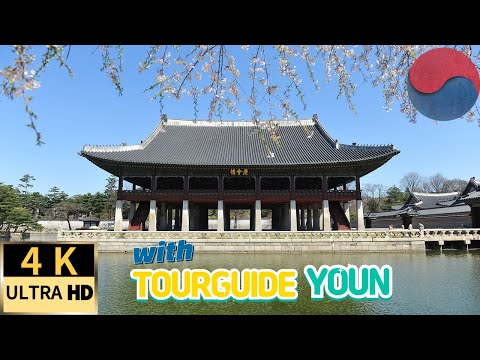
Gyeongbokgung Palace, a jewel in the heart of Seoul, South Korea, stands as a grand symbol of the country’s rich history and architectural elegance. Built in 1395 by King Taejo, the founder of the Joseon dynasty, this majestic palace has endured various restorations after numerous destructions throughout its history. Today, it offers visitors from around the globe a glimpse into royal life of the past and showcases traditional Korean architecture at its finest. If you’re planning to explore this historic site, here are some essential tips and information to enhance your visit.
**History and Significance**
Gyeongbokgung Palace, which means “palace greatly blessed by Heaven,” was originally constructed as the main palace of the Joseon dynasty. Over centuries, it has witnessed significant events including invasions and colonial rule, leading to multiple reconstructions, most notably in the 19th century under King Gojong. The palace complex was once home to hundreds of buildings and served as the administrative and residential center for Korean royalty.
**What to See**
The palace complex is vast, featuring several key structures that are must-sees:
1. **Geunjeongjeon Hall**: The throne hall where the king formally greeted foreign envoys and held official affairs.
2. **Gyeonghoeru Pavilion**: A stunning two-story pavilion surrounded by water where banquets were held.
3. **Hyangwonjeong Pavilion**: An iconic two-tiered hexagonal pavilion set on an island within a large pond.
4. **The National Palace Museum of Korea**: Located within the grounds of Gyeongbokgung Palace, this museum showcases artifacts from Korea’s royal past.
5. **The National Folk Museum of Korea**: Also on site, this museum presents Korean folk history with artifacts that depict the lifestyle of ancient Koreans.
**Visitor Tips**
– **Opening Hours**: Gyeongbokgung Palace is open from 9 AM to 6 PM but closed every Tuesday. The last entry is usually one hour before closing.
– **Admission Fees**: There is a modest fee to enter Gyeongbokgung Palace which includes access to both The National Palace Museum of Korea and The National Folk Museum of Korea.
– **Guided Tours**: Free guided tours in English are available multiple times a day except Tuesdays. These tours provide insightful information not only about the architecture but also about historical contexts that enrich your experience.
– **Wear Hanbok**: Visitors wearing traditional Korean dress (Hanbok) can enter free of charge and it makes for great photo opportunities against the backdrop of ancient architecture.
– **Changing of Guard Ceremony**: Don’t miss this spectacular reenactment at Gwanghwamun Gate which occurs twice daily (except Tuesdays). This event replicates traditional guard uniforms, weapons, and accessories.
**Getting There**
Located at 161 Sajik-ro, Jongno-gu in Seoul, Gyeongbokgung Palace is easily accessible by public transport. The closest subway station is Gyeongbokgung Station (Line 3), Exit 5 or Anguk Station (Line 3), Exit 1 which provides direct access toward its entrance.
**Cultural Etiquette**
As a visitor to one of Seoul’s most historic sites:
1. Be respectful in areas marked as sacred or restricted.
2. It’s advisable not to touch or climb on ancient structures.
3. Maintain decorum within palace premises keeping noise levels low.
Exploring Gyeongbokgung Palace not only provides insight into South Korea’s cultural heritage but also offers an enriching experience into Joseon Dynasty’s royal culture against a backdrop of stunning architectural feats. Whether you’re interested in history or looking for picturesque scenes for photography, Gyeongbokgung promises an unforgettable exploration enriched with culture and beauty—a true must-visit when in Seoul!