
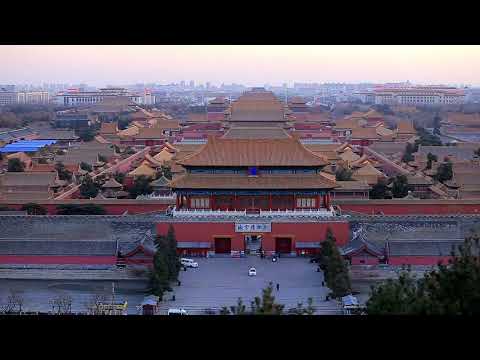
Nestled in the heart of Beijing, the Forbidden City stands as a monumental tribute to China’s rich history and architectural grandeur. As a UNESCO World Heritage Site, this ancient imperial palace complex not only attracts millions of tourists each year but also serves as a profound symbol of China’s cultural and historical legacy. With the advent of 4K video technology, visitors can now explore its wonders in stunning high-definition detail, providing an immersive experience that transcends time and geography.
#### Historical Context
The construction of the Forbidden City began in 1406 under the orders of Yongle Emperor of the Ming Dynasty and took 14 years to complete. It served as the imperial palace for emperors over two dynasties — Ming and Qing — until the abdication of Puyi, the last Emperor of China, in 1912. The complex consists of 980 buildings covering 72 hectares (180 acres), making it the world’s largest palace complex according to Guinness World Records.
#### Architectural Marvel
The architecture of the Forbidden City is a testament to traditional Chinese building practices and aesthetics. Its layout is meticulously planned according to Feng Shui principles and symbolic meanings. The entire complex is encased within an enormous rectangular wall with four gates, each facing a cardinal direction with the Meridian Gate (Wumen) being the most prominent one.
Central to its architectural beauty are the Hall of Supreme Harmony (Taihedian), Hall of Central Harmony (Zhonghedian), and Hall of Preserving Harmony (Baohedian), which were used for ceremonial occasions like coronations and imperial weddings. The roofs are decorated with intricate designs featuring yellow glazed tiles — yellow being an imperial color — which stand out against red walls and beautifully carved wooden beams, reflecting divine opulence.
#### Cultural Significance
The Forbidden City is not just an architectural marvel but also a treasure trove containing over a million rare and valuable works of art, including paintings, ceramics, seals, steles, sculptures, inscriptional rubbings, bronzes, court documents and more from ancient China. These artifacts are crucial in understanding Chinese political philosophy, culture rituals, and social customs that spanned over five centuries.
#### Modern Exploration in 4K
Exploring this vast complex might once have required days or even weeks to fully appreciate its beauty and intricacies. However, modern technology has changed that dynamic drastically. With high-definition 4K video tours available online or through virtual reality platforms at tourism centers near you; viewers can now enjoy breathtaking views from above or take detailed walkthroughs into the deepest corners virtually anywhere around globe.
These videos offer unparalleled clarity revealing intricate details on architectural designs such as tile patterns dragons adorning rooftops which might be missed by casual observers on ground level moreover they bring distant viewers closer than ever before inviting them into inner sanctums where past emperors conducted state affairs hence fostering greater appreciation understanding Chinese heritage across world audiences further solidifying status UNESCO World Heritage site not just national landmark global icon deserving preservation for future generations learn from admire celebrate together regardless physical distances separating them real life locations themselves
#### Preservation Efforts
Maintaining such an immense site is no small feat; hence continuous efforts are made both by Chinese authorities international experts alike ensure preservation integrity site amidst challenges posed environmental factors increasing tourist footfall Using advanced technologies materials scientists restorers work tirelessly monitor condition various structures ensure they remain true their original form whilst providing necessary interventions prevent deterioration while ensuring site remains accessible sustainable way possible public educational purposes too
In conclusion visiting exploring Forbidden City either person through digital means offers insightful glimpse into cultural richness heritage that shaped civilization lasted over thousands years Its existence enriching knowledge human achievements reminding us importance preserving our past while embracing advancements present future