
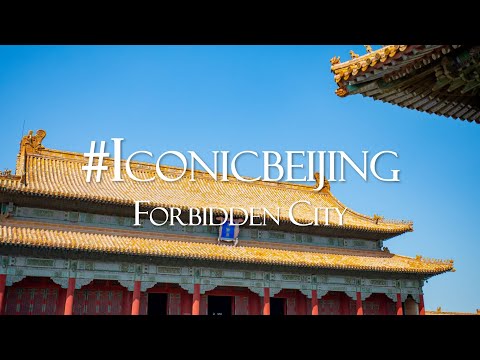
Nestled in the heart of Beijing, the Forbidden City stands as one of the most illustrious symbols of China’s grand historical narrative. This sprawling palace complex, once the epicenter of Chinese imperial power, continues to captivate visitors with its majestic architecture and deep cultural significance. As a UNESCO World Heritage site since 1987, the Forbidden City offers a profound insight into China’s dynastic history and traditional artistry that shaped East Asian culture for centuries.
**Architectural Grandeur and Design**
The Forbidden City, also known as the Imperial Palace, was constructed from 1406 to 1420 during the reign of Emperor Yongle of the Ming Dynasty. It served as the Chinese imperial palace until the end of the Qing Dynasty in 1912. Covering approximately 180 acres with nearly 1,000 buildings and over 9,000 rooms, it is one of the world’s largest palace complexes.
The layout of the Forbidden City is a testament to traditional Chinese architectural principles and cosmology. It is designed along a north-south axis considered auspicious in Chinese culture. The complex is surrounded by a massive defensive wall and a moat, which create an imposing yet protective perimeter. The main structures feature golden roofs richly adorned with wooden brackets underpinned by an intricate system of dougong — interlocking wooden brackets that are both functional and decorative.
**Symbolism and Functionality**
Every aspect of the Forbidden City’s design holds symbolic meaning. The colors red and yellow dominate: red symbolizes happiness and good fortune; yellow represents absolute power and was traditionally reserved for the emperor. The layout exemplifies Feng Shui principles aimed at harmonizing individuals with their surrounding environment.
The complex was divided into two main sections: the Outer Court or Front Court used for ceremonial purposes, where significant events like coronations and state affairs were held; and the Inner Court or Back Palace, which served as private living quarters for the emperor, his family, and concubines. This segregation illustrates both political ideology and Confucian values emphasizing orderliness in ruler-subject relationships.
**Rich Collection of Artifacts**
Today’s Forbidden City is also known as The Palace Museum because it houses an extensive collection of artwork and artifacts from various dynasties that ruled China. Visitors can explore elaborate displays that include ceremonial robes worn by emperors during rituals, ancient porcelain vases exquisitely crafted during different eras, priceless jade ornaments, traditional paintings depicting historic figures or landscapes illustrating meticulous artistry reflective of China’s rich heritage.
**Conservation Efforts**
Maintaining such an expansive complex has been an ongoing challenge given Beijing’s urban development pressures combined with environmental factors like pollution weakening ancient structures made primarily from wood. In recent years there have been concerted efforts towards restoration projects aimed at preserving this iconic monument for future generations while ensuring its structural integrity against natural deterioration processes over time without compromising its historical authenticity.
**Cultural Impact & Global Recognition**
The influence that this architectural marvel has exerted on other East Asian cultures cannot be overstated; it has inspired numerous palaces across Asia — both structurally in terms aesthetic features derived directly from designs employed within its walls.
Moreover globally speaking its recognition extends much further forming part integral part discussions pertaining global cultural heritage preservation practices thereby emphasizing universal values associated respect understanding amongst diverse civilizations through shared history.
For anyone visiting Beijing or studying Chinese history touring this legendary site remains essential providing invaluable insights into not only past regimes but also societal evolution across numerous centuries right up until present day encapsulating spirit resilience adaptiveness which continues define much modern day China itself.
Visiting Beijing’s iconic Forbidden City offers more than just a glimpse into imperial aesthetics; it provides a profound understanding cultural continuity amidst changing times making truly unique destination worth exploring.