
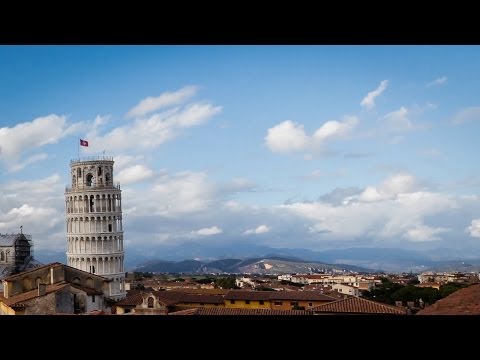
Nestled in the heart of Pisa, Italy, the Leaning Tower of Pisa is not just an architectural anomaly but a beacon that has attracted millions from across the world. Standing at about 56 meters tall and famously known for its unintended tilt, this freestanding bell tower has been a subject of study and fascination since its inception in August 1173. To truly appreciate the allure and ongoing transformation of this global icon, nothing serves better than a timelapse video—a technique that allows us to witness hours, days, or even years in just a few minutes.
#### **Why a Timelapse of the Leaning Tower of Pisa?**
Timelapse photography is an incredibly effective tool for capturing something as dynamic yet subtly changing as the Leaning Tower. The process involves taking frames at set intervals to record changes that are generally slow for the human eye to notice. When played at normal speed, time appears to be moving faster and thus lapsing. For an ancient structure like Pisa’s tower, this technique does not just document its present state but peels back layers of history, showing how it withstands or succumbs to elements over time.
#### **Creating a Historical Document**
The conservation efforts and structural reinforcements that have taken place over decades are crucial chapters in the story of the Leaning Tower. A timelapse can effectively document these interventions—how professionals meticulously work on its preservation while maintaining its historical essence. It also provides educational insights into the architecture techniques used during various periods and demonstrates engineering marvels.
#### **Observing Natural Interactions**
A well-executed timelapse also captures natural changes such as varying light conditions around dawn and dusk, seasonal alterations surrounding the architecture, and even shifting weather patterns—all contributing factors to how we perceive color and texture changes in ancient stones over time. This can transform our understanding from seeing it merely as a static relic to recognizing it as part of a living ecosystem.
#### **Tourist Dynamics**
The human element is equally fascinating. Observing through timelapse how tourists interact with spaces around them provides insights into cultural engagement with historical sites. The ebb and flow of people around the tower during different times of day or seasons highlight patterns—peaks during summer months or quietude amidst winter’s chill.
#### **Technical Considerations**
Creating a timelapse video requires thoughtful consideration—setting up cameras at optimal positions, choosing correct intervals for frames (depending on what one wishes to capture), ensuring consistent exposure throughout sequences, and maintaining equipment against natural wear over long periods. Further challenges include dealing with high tourist traffic areas where equipment might be prone to interruptions.
#### **Artistic Expression Through Time**
Beyond documentation, timelapses possess an inherent artistic quality—they transform ordinary viewing experiences into extraordinary visual journeys. By accelerating time around a slow-changing object like the Leaning Tower of Pisa, these videos provide viewers with almost surreal experiences that challenge perceptions while offering beauty distilled through time.
#### **Conclusion: A Journey Through Centuries in Minutes**
In essence, capturing a timelapse video at such heritage sites is not simply about filmmaking; it’s about narrating history dynamically through modern technology lenses—a delicate balance between preserving delicate pasts while embracing technological advances. As we continue witnessing transformations through meticulously recorded lapses in time, these visuals serve not only as records but also as reminders; reminders that all things – no matter how seemingly permanent – are subject to change under nature’s untiring rhythm.