
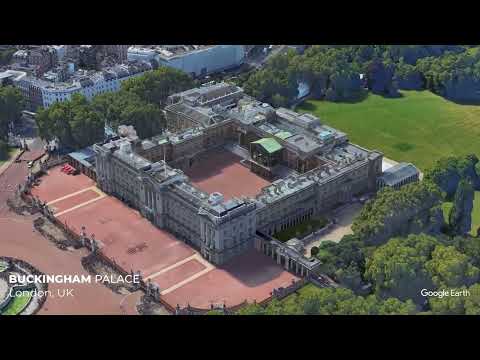
Nestled in the heart of London, Buckingham Palace is not just the administrative headquarters and London residence of the monarch of the United Kingdom; it stands as a potent symbol of a nation’s history and its ongoing royal traditions. Known for its imposing facade and as a center for national rejoicing as well as solemn royal ceremonies, Buckingham Palace attracts millions of visitors and captivates countless others around the world.
#### History and Evolution
The origins of Buckingham Palace trace back to 1703 when it was originally built as a private townhouse for the Duke of Buckingham. Over time, it underwent numerous expansions and renovations, especially after King George III acquired it in 1761 as a private residence for Queen Charlotte, branding it “The Queen’s House.” It was George IV who began transforming the house into a palace in the early 19th century with the aid of architect John Nash. The palace has since evolved through various monarchs each leaving their mark.
Today’s familiar structure with its famous balcony facing The Mall was completed during Queen Victoria’s reign. She was also the first sovereign to take up residence there in 1837. Since then, Buckingham Palace has been home to Britain’s reigning monarchs and has played host to countless state functions, banquets, and royal events.
#### Architectural Marvel
Buckingham Palace features approximately 775 rooms including nineteen State rooms, fifty-two Royal and guest bedrooms, ninety-two offices, seventy-eight bathrooms, and a staggering 188 staff bedrooms. These numbers alone give us an insight into the massive scale on which the palace operates daily.
The public facade that most are familiar with showcases fine examples of neoclassical design by Edward Blore who completed Nash’s unfinished work after his dismissal. The iconic balcony was added during Queen Victoria’s residency; from here royals have greeted their subjects during major celebrations and announcements.
#### Royal Ceremonies and Public Access
One of the most quintessentially British scenes one can witness at Buckingham Palace is the Changing of the Guard ceremony. This elaborate ritual involves a new guard exchanging duty with the old guard – all accompanied by music and precise military drills – reflecting discipline and tradition that are characteristic aspects of British monarchy.
Partially open to tourists in summer months when royals make their annual visit to Scotland, visitors can tour the State Rooms containing an impressive collection of paintings by Rembrandt, Van Dyck, Rubens; some exquisite English and French furniture; alongside other works of art part of The Royal Collection.
#### Cultural Impact
Beyond its role as a royal residence, Buckingham Palace stands as a cultural icon representing centuries-old traditions juxtaposed alongside modern-day Britain. It has witnessed jubilant national celebrations such as royal weddings – including that of Prince William to Catherine Middleton – historic declarations finished off with crowd waves from that central balcony to times when people gathered en masse outside its gates to mourn passings or show solidarity during crises like World War II or more recently during various national lockdowns.
In summing up this bastion’s importance – whether seen through awe-filled eyes by tourists snapping pictures along The Mall or studied academically for its architectural significance – Buckingham Palace remains firmly ingrained not only in London’s landscape but equally so in Britain’s cultural psyche. As long as there is a monarchy in Britain, Buckingham Palace will continue to intrigue generations yet unborn while keeping alive centuries-old traditions amidst ever-evolving global changes.