
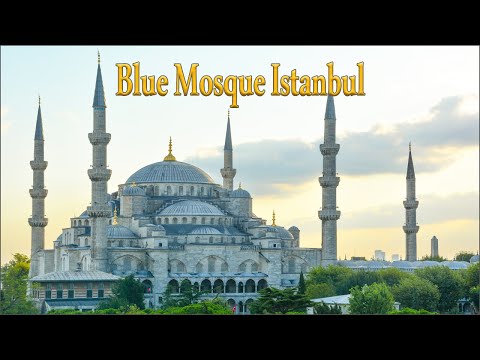
Nestled in the historic heart of Istanbul, Turkey, the Sultan Ahmed Mosque, popularly known as the Blue Mosque, stands as a monumental tribute to both the spiritual and architectural grandeur of the Ottoman Empire. Built during the reign of Sultan Ahmed I between 1609 and 1616, this mosque isn’t just a place of worship but a vibrant canvas showcasing Islamic art, culture, and history. Here’s an in-depth look at its historical significance and some incredible facts that make it one of Istanbul’s most visited landmarks.
### Historical Background
The decision to build the Blue Mosque was somewhat politically motivated; Sultan Ahmed I aimed to surpass the grandeur of Hagia Sophia, an ancient Byzantine church converted into a mosque in 1453 after Constantinople was conquered by Sultan Mehmet II. Notably younger than many other sultans at the time of his ascension, Ahmed I sought to assert his authority and leave a lasting legacy through this architectural feat.
The mosque was designed by Sedefkar Mehmed Agha, a pupil of Sinan, who was considered one of the most esteemed architects of his time. Sedefkar Mehmed Agha employed traditional Islamic architecture melded with Byzantine elements particularly visible in the design of Hagia Sophia nearby. This amalgamation not only underscores Istanbul’s identity as a bridge between East and West but also showcases an evolution in Ottoman architectural styles.
### Architectural Splendor
One of the most striking features of the Blue Mosque is its majestic dome, flanked by six slim minarets. While most mosques traditionally had four or fewer minarets, the addition of six minarets caused initial controversy as it equaled the number at Mecca’s sacred mosque. The issue was later resolved by adding a seventh minaret to Mecca’s mosque.
The interior is no less impressive; more than 20,000 handmade ceramic tiles adorn its high ceiling in myriad patterns featuring flowers, trees, and abstract designs. Depending on how light strikes them during different times of day they seem to change colors but are predominantly blue – hence its popular nickname ‘Blue Mosque’. Additionally, over 200 stained glass windows with intricate designs allow natural light to seep through thereby casting reflections over its vast prayer hall that enhances its spiritual ambiance.
### Incredible Facts
1. **Nightly Light Show**: The Blue Mosque is bathed nightly in blue lights which makes for extraordinary viewing against Istanbul’s skyline – symbolically highlighting how once upon a time manuscripts were inscribed using gold or silver emphasized under candlelight inside such mosques.
2. **Tunnel Link**: A lesser-known fact about this historical edifice is that it has an underground tunnel which connects it directly to Hagia Sophia across Sultanahmet Square – although not accessible to public.
3. **Earthquake Resilience**: Located in one of earth’s major earthquake fault lines Istanbul posed engineering challenges yet clever internal reinforcements have allowed this mammoth structure to withstand numerous earthquakes over centuries.
4. **Cultural Significance**: Beyond being just a place for daily prayers (namaz), during Ramadan countless worshippers gather here for special night prayers called Tarawih making it one focal point for observing holy rituals throughout Islam’s holiest month.
5. **Tourist Friendly**: It remains operational as a mosque yet welcomes millions from around globe annually offering insights into Islamic practices alongside stunning visual experiences – indeed few mosques around globe can claim such dual roles seamlessly merged together!
### Conclusion
Visiting or simply viewing images from afar doesn’t do justice until one truly experiences essence contained within those towering walls and under those high arches echoing calls for prayer (adhan). The Blue Mosque stands not only as architectural success or religious icon but also testament to rich history embodying spirit cultural convergence epitomizing city that hosts it – Istanbul; where Asia meets Europe along waters Bosporus Strait holding stories millennia waiting be told.