
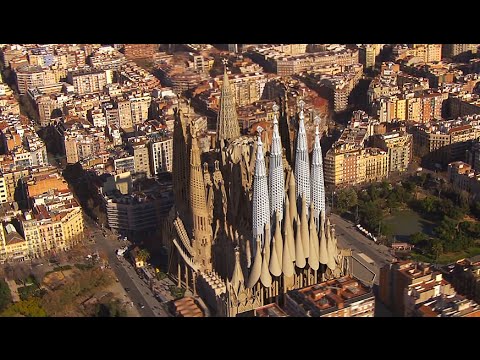
The Basílica de la Sagrada Família, conceived by the visionary architect Antoni Gaudí, is not only a symbol of Barcelona but one of the most intriguing architectural projects in the world. Since its inception in 1882, the basilica has undergone continuous construction, delays, and debates that have only added layers to its rich history and mystique. As we approach its expected completion date in 2026—the centennial year of Gaudí’s death—anticipation grows. Let’s explore what this architectural marvel will look like upon completion and what this means for Barcelona and the world of art and architecture.
### The Architectural Vision
Antoni Gaudí’s design for the Sagrada Família is a blend of Gothic and Art Nouveau forms that pushes the boundaries of architectural imagination. Gaudí devoted over 40 years of his life to the project, and his visionary approach was rooted in nature and spirituality. The completion of the basilica is based on meticulous plans revised by an array of architects who succeeded him, ensuring fidelity to his original vision.
### The Towers: Reaching for the Heavens
Upon its completion, Sagrada Família will boast 18 towers. Each has a specific symbolic meaning, representing Jesus Christ, Virgin Mary, the four evangelists (Matthew, Mark, Luke, and John), and the twelve Apostles. The central tower dedicated to Jesus Christ will rise to an astonishing height of 172 meters, making it one of Europe’s tallest religious structures. This towering height ensures that it remains a profound landmark visible from numerous points throughout Barcelona.
### The Facades: Telling Timeless Stories
The basilica features three grand facades: the Nativity façade which is oriented towards the east was built under Gaudí’s direct supervision and features scenes celebrating life; it exudes joy with its intricate carvings of plants, animals, and human figures depicting various biblical scenes associated with Jesus’s birth.
The Passion façade faces westward; stark in contrast to show sorrowful moments leading up to Christ’s crucifixion. Its angular sculptures convey intense emotion reflecting Jesus’ suffering.
Finally proposed is Glory façade which remains incomplete; intended as main entrance will represent road to God: Death, Final Judgment & Glory.
### Inside Sagrada Familia: A Forest Made of Light
Gaudí envisaged Sagrada Família’s interior as a ‘forest’ filled with light. Its columns are designed like trees that branch out into vaults forming a unique stone canopy overhead with varying lights shaping an atmosphere filled with tranquility—a place where nature meets divinity promoting meditation & reflection.
### Modern Techniques Meet Historical Fidelity
Technological advancements have been pivotal in progressing construction while adhering closely to Gaudí’s original models damaged during Spanish Civil War by utilizing old photographs & plasters as reference points alongside modern techniques like computer-aided design (CAD) & stone-cutting CNC milling machines which have significantly reduced time required for sculpting stones manually ensuring precision needed for such complex structures.
### A New Social Hub
Once completed Sagrada Família will not only be an architectural gem but also a social hub enhancing local community facilitating religious gatherings cultural events & tourism significantly impacting local economy boosting hospitality sectors like hotels restaurants retail shops around vicinity ensuring economic sustainability maintaining cultural heritage alive vibrant through generations ahead.
### Conclusion
Antoni Gaudi once said “My client isn’t hurry” referring divine intervention his unfinished masterpiece As we near end journey envisioning completed basilica it stands testament resilience dedication countless individuals kept alive dream transforming into reality vast potential inspire generations come deepening our appreciation interconnectedness art architecture spirituality.