
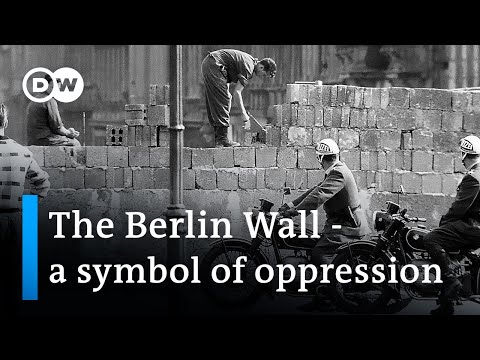
On August 13, 1961, the city of Berlin became the focal point of the Cold War’s most palpable symbol of division: the Berlin Wall. Erected overnight, the Wall was initially just barbed wire but soon evolved into a fortified concrete barrier that completely encircled West Berlin, isolating it from East Germany and, metaphorically, from Eastern Bloc socialist countries. This year marks the 60th anniversary of this significant historical event—an occasion that serves not only to reflect on a painful past but also to understand its lessons for future generations.
### The Genesis of the Divide
After World War II, defeated Germany was divided into four occupational zones managed by the United States, the Soviet Union, Britain, and France. Berlin, located deep within Soviet-controlled territory, was similarly divided despite its geographical isolation. Over time, ideological differences between the Soviet regime in East Germany and the democratic West hardened into physical form with the construction of the Wall.
The immediate pretext for building the Wall was to stop East Germans from fleeing to West Germany—by 1961 over 2.5 million had fled—draining vital human resources that undermined economic viability and political stability in East Germany. Walter Ulbricht’s government claimed that it was an “Antifascist Protection Rampart” designed to keep out Western spies and aggressors.
### Life With The Wall
For 28 years, the Berlin Wall stood as a grim marker of geopolitical tension. Families were divided; people lost their jobs or access to education; and several lost their lives trying to cross it. Nearly 140 people died attempting to overcome this heavily guarded barrier—a stark reminder of human desperation for freedom and self-determination.
The presence of watchtowers and guards who did not hesitate to shoot escapees marked daily life near its vicinity with a sense of fear and oppression—a stark contrast to life barely a few meters away in West Berlin where residents enjoyed greater personal freedoms and economic opportunities.
### The Fall And Its Aftermath
The eventual fall of the Berlin Wall on November 9, 1989 came unexpectedly swift amidst growing civil unrest in East Germany and changing policies from Mikhail Gorbachev’s USSR toward Eastern Europe. The peaceful revolution swelled through cities challenging one-party rule leading authorities to finally yield by granting free passage between East and West Berlin that night.
Celebrations ensued immediately with jubilant crowds wielding picks and hammers chipping away at this edifice which had partitioned families for nearly three decades. The fall is often celebrated as a triumphant moment in European history when barriers were lifted not just between two halves of one city but symbolically across Europe dividing East from West during Cold War.
### Remembering And Looking Forward
Today’s unified Berlin features only a few remnants preserved for historical remembrance such as at Checkpoint Charlie or along Bernauer Straße where memorials testify about those who suffered under its shadow. Each year on this anniversary we are reminded both how far we have come towards peace-building post-conflict environments but also reminded about ongoing conflicts where barriers still exist or new ones are erected separating communities once again.
As we commemorate sixty years since its erection by reflecting through educational programs museums films books etc., it becomes crucial for newer generations especially who did not live through these events directly understand significance behind why walls should not become solutions toward complex socio-political issues globally today or ever again.