
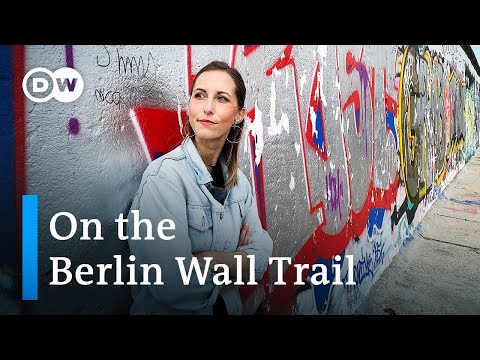
Six decades have passed since the Berlin Wall first dissected the vibrant city of Berlin. Erected overnight on August 13, 1961, it became a stark symbol of the Cold War divisions between East and West. Today, with most of its concrete slabs dismantled or shipped to museums worldwide, what remains are not just scattered remnants but also poignant memories and lessons that resonate deeply in our contemporary geopolitical landscape.
### The Rise of the Divisive Barrier
The story of the Berlin Wall begins in post-World War II Germany. By 1949, Germany was officially divided into East Germany (the German Democratic Republic or GDR) and West Germany (the Federal Republic of Germany or FRG), each backed by opposing global superpowers in the Soviet Union and the United States, respectively. Berlin, located deep within East German territory but itself divided into four sectors controlled by different Allied powers, quickly became a focal point for Cold War tensions.
As West Berlin flourished under economic assistance from America’s Marshall Plan, East Berlin faced economic hardships and political repression under communist rule. This disparity led to a massive exodus from East to West through the open border in Berlin. By 1961, nearly 3.5 million East Germans had fled to West Germany through this route.
To stop this “brain drain” and secure its regime’s stability, on August 13, 1961, under orders from Walter Ulbricht and backed by Soviet leader Nikita Khrushchev, East Germany sealed off its border to West Berlin. Initial barbed wire fences were hastily erected overnight which eventually solidified into a formidable barrier stretching over 155 kilometers around all three western sectors.
### Life with The Wall
The stark concrete structure stood roughly 12 feet high and included guard towers placed at regular intervals along large concrete walls topped with barbed wire. The “death strip”, a controlled no-man’s land that featured anti-vehicle trenches and further fortifications made it perilous for defectors who risked being shot on sight by GDR border guards.
Families found themselves suddenly split across divergent political ideologies and sovereign states; communication stifled unless sanctioned through stringent official channels. The wall did more than divide a city; it severed normal life connections from familial ties to everyday social interactions.
### Fall of The Wall
The fall of the Berlin Wall on November 9, 1989 – less than three decades after its abrupt construction – was as quick as its rise. Sparked by mounting economic troubles in Eastern Europe and increasing freedom movements symbolized by Poland’s Solidarity movement among others) alongside Mikhail Gorbachev’s liberal reforms (“Glasnost” and “Perestroika”) in the Soviet Union itself – pressures mounted on East German authorities.
An announcement made erroneously by an East German official regarding immediate border opening led crowds from both sides swarming towards checkpoints leading to spontaneous dismantling efforts—people hacked away parts using sledgehammers and picks celebrating their newfound freedom together.
### Traces Left Behind
Today’s Berlin shows few overt signs that such an oppressive structure ever existed here; only segments remain physically—like those preserved at Bernauer Strasse or showcased at Checkpoint Charlie Museum which serve as powerful reminders against oppressive regimes’ intolerance towards human freedoms.
Moreover significant is how this physical division has left psychological traces within collective memories influencing perceptions about political ideologies worldwide about democracy versus autocracy debates evident even today thereby shaping policy decisions globally affecting international relations dynamics continually evolving ever since this pivotal moment in history occurred sixty years ago now serving as crucial learnings guiding future generations forward inherently intertwined within global socio-political fabrics forevermore changing lives beyond merely those residing within once-divided Berlins borders themselves making everyone richer understanding derived thereof universally applicable elsewhere too globally relevant still today hence why we remember—and learn—from history always onwards forevermore indeed significantly so nontrivially impactful throughout time eternal indeed quite profoundly inspired thereby altogether fundamentally essentially critically vitally important understand why we must never forget nor repeat past mistakes again ever after henceforth eternally mindful thereof truly ultimately enduringly inspiring too beyond words merely stated herein simply conveyed instead deeply felt universally understood fully appreciated throughout ages timeless wisdom imparted therein absolutely indeed imperative remember always never forget hope springs eternal human spirit unbroken always prevails inevitably triumphant ultimately indeed so inspiringly beautiful truth holds real power genuinely transformative undeniably impactful lasting legacy left behind unmatched unparalleled uniquely special historically significant monumentally important.